Streamlined Filing
IRS Streamlined Filing: The Complete 2026 Guide for UK Expats
Behind on your US taxes in the UK? The IRS Streamlined Filing Compliance Procedures let non-willful Americans abroad catch up penalty-free. Here is exactly how the streamlined offshore procedures work in 2026.
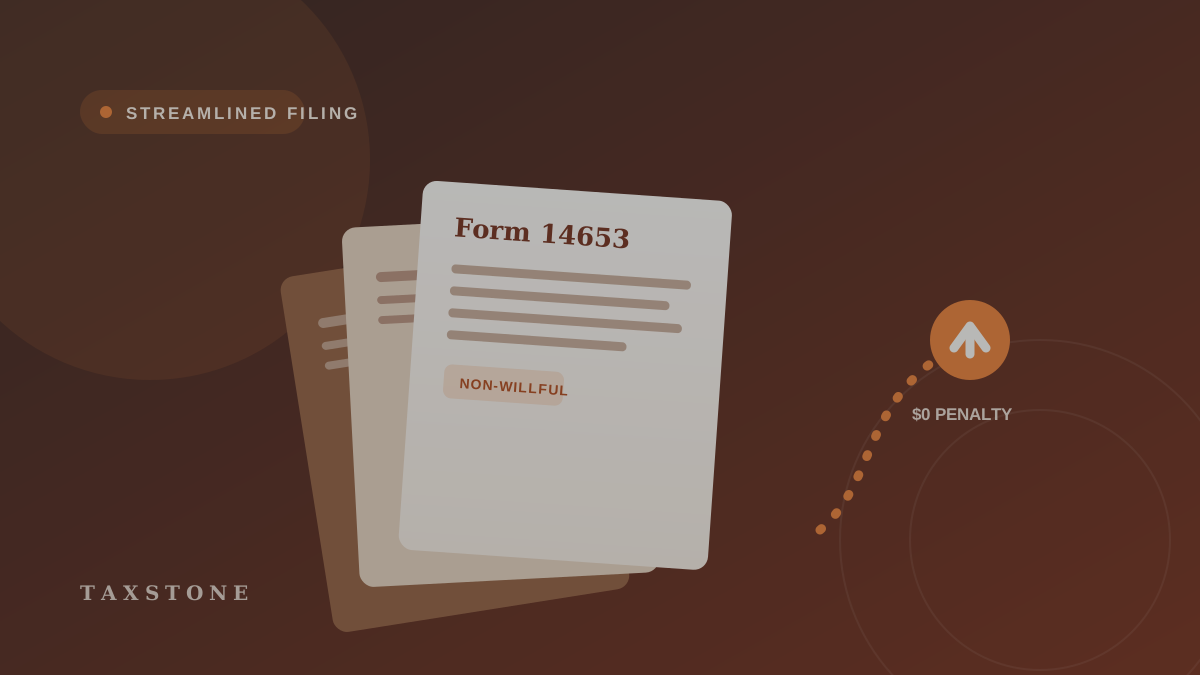
If you only recently discovered that Americans must file US taxes from abroad, you are in very good company — and there is a clean, official way back into compliance. The IRS Streamlined Filing Compliance Procedures were designed for exactly this: ordinary people who did not know they had to file. This 2026 guide explains how the streamlined offshore procedures work for UK expats, who qualifies, and what you actually submit.
What IRS streamlined filing is
Streamlined filing is an IRS amnesty-style programme that lets US taxpayers who failed to report foreign income and accounts get current without the harsh penalties that normally apply. For Americans living in the UK, the relevant track is the Streamlined Foreign Offshore Procedures (SFOP). Used correctly, it waives the failure-to-file, failure-to-pay, accuracy-related, information-return and FBAR penalties — leaving a $0 offshore penalty for eligible non-willful taxpayers.
Foreign vs domestic: SFOP vs SDOP
There are two streamlined tracks, and which one you use depends on whether you live abroad.
- Streamlined Foreign Offshore Procedures (SFOP) — for taxpayers who meet the non-residency test (broadly, outside the US for at least 330 days in one of the last three years). This is the route for most UK-resident Americans, and the offshore penalty is 0%.
- Streamlined Domestic Offshore Procedures (SDOP) — for those who live in the US; it carries a 5% miscellaneous offshore penalty.
Do you qualify? The non-willful test
The single most important eligibility condition is that your failure to file was non-willful — meaning it was due to negligence, inadvertence, mistake, or a good-faith misunderstanding of the law, not a deliberate choice to hide income. The classic streamlined candidate is the "accidental American" or long-term expat who simply never knew the obligation existed.
- You must certify your conduct was non-willful (this is the heart of the programme).
- For SFOP you must meet the non-residency requirement.
- You must have a valid US Taxpayer Identification Number (SSN or ITIN).
- You cannot use streamlined if the IRS has already opened an examination of your returns.
What you actually file
A streamlined submission is a complete package, not a single form. For the Streamlined Foreign Offshore Procedures it consists of three parts.
- Tax returns for the most recent 3 years for which the due date has passed — delinquent returns filed, or amended returns corrected.
- FBARs (FinCEN 114) for the most recent 6 years for which the deadline has passed.
- Form 14653 — the certification that you are eligible and that your conduct was non-willful.
- Payment of any tax and interest due with the returns (often little or nothing once the Foreign Tax Credit is applied).
Form 14653: the non-willful certification
Form 14653 is the centre of gravity of the whole submission. It is a signed statement, under penalty of perjury, telling your story: why you did not file, and why that was non-willful. A vague or careless certification is the most common reason streamlined cases run into trouble, so it is worth getting right — specific, honest, and consistent with the returns you are filing.
How the submission works, step by step
- 1. Confirm eligibility — non-willful conduct and, for SFOP, the non-residency test.
- 2. Gather records — income, UK accounts, pensions and investments for the relevant years.
- 3. Prepare 3 years of US returns, applying the FEIE and/or Foreign Tax Credit.
- 4. Prepare and e-file 6 years of FBARs through FinCEN's BSA E-Filing System, marking them as filed under streamlined procedures.
- 5. Draft and sign Form 14653.
- 6. Mail the paper package — the 3 returns plus Form 14653 — to the dedicated IRS streamlined processing address (these returns are paper-filed, not e-filed).
After you file
There is no formal acceptance letter for a streamlined submission — no news is generally good news. The IRS may, in a minority of cases, follow up with questions, which is one more reason the certification and returns need to be solid and consistent. Once you are caught up, you simply continue filing on time each year going forward, and you are back in good standing.
Related TaxStone services